
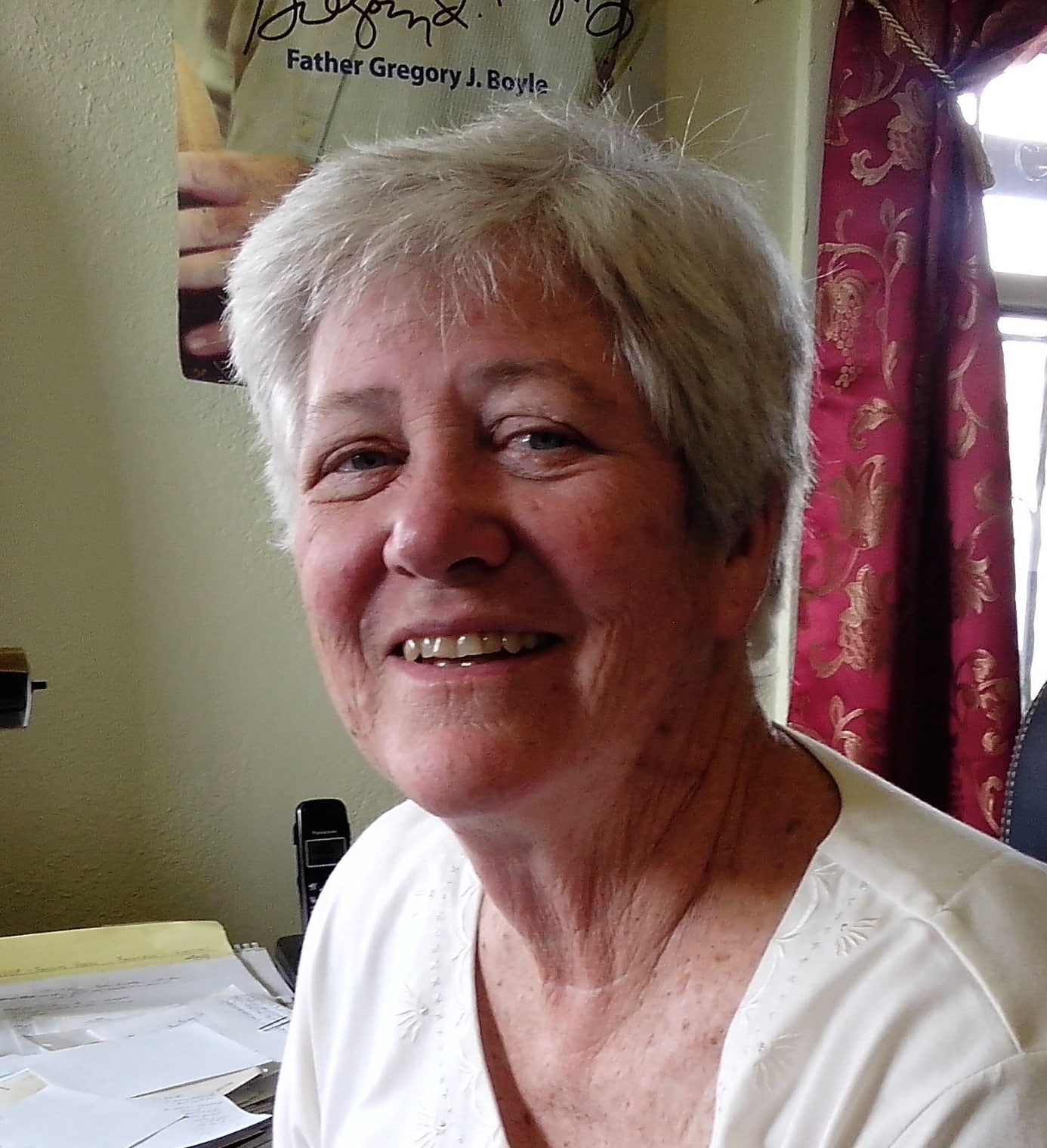
Sister Mary Sean Hodges
Los Angeles, CA
I taught math and religion in elementary and high schools as a Dominican Sister for 40 years. When I turned 60, I started looking for a new job. I ended up volunteering with another sister from Catholic Charities who went into prisons each week. That was the clincher. I realized I wanted to do prison work.
Back in Los Angeles, where I live, I went to see person in charge of the Archdiocese’s restorative justice program - another sister - and applied for an open position.
When I started 14 years ago, the attitude towards rehabilitation and prisoner re-entry programs was pretty hostile. The state wanted the prisons full because of the jobs they provided, and there was little money for programs for them. The corrections department’s job was to punish inmates and keep them in a long time.
In those days, inmates who got out had nowhere to go, so I opened up the first home for re-entry. Our organization, PREP: Partnership for Re-entry Program is aimed at ”lifers”- those sentenced to 25 years to life, who are often released into a world they don’t understand.
We have 15 men living in the house at any one time. It might surprise you that these guys are so wisdom-filled, after their time “inside.” The hardest hurdle is jobs. They don’t have “jobbable” skills. So they get the weak jobs and it’s often not enough for them to get going again.
Their biggest challenge is the fast pace of life. As one put it: “I’ve been left out my whole life. And I’m still left out now.” One woman who was released broke down during a visit to a fast food place, because she didn’t know how to order. They don’t know how to take the bus, or walk into a store and ask for help, not to mention all this new technology.
Our home is a transition for them for two to three years before they go out on their own. But some are age 60 or 70 and haven’t run a household for 30 years, don’t know how to pay bills and are too old to get a job. Going on social security won’t sustain them, so they stay in our home with no good next step.
The greatest impact we are having is our presence, being there, sticking with them and having the belief that all these men have value. The inside skin of these men is broken but there’s a gentleness and love there. Some say to me: “You wouldn’t have liked me if you knew me as a younger person.”
I still do a lot of prison visiting. With every visit, I hear: “When are you coming back?” “Thank you for traveling to come see us.” That’s impactful.