
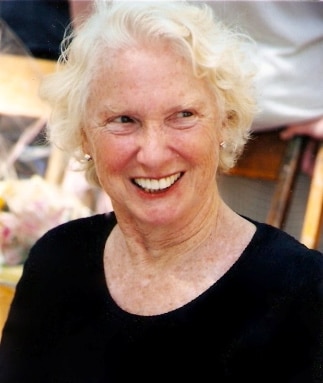
Emilie Barnett
,
It was 3:00 a.m. on a July morning in 2000 and, at 66 years of age, I was among 50 Peace Corps trainees who landed at Queen Alia airport outside of Amman. The temperature had fallen to 104 degrees from 120. I enjoyed living in Jordan and, especially, the Jordanians with whom I worked. However, I could not do much at the center to which I was assigned and returned home in May 2001, four months before the 9/11 attacks.
Fear and even hatred of Muslims became pervasive, for few Americans had ever known any – not even those in their own communities. I began to explore ways to overcome this ignorance. I developed the idea of small group discussions of the Abrahamic traditions in local communities. This was the inception of “Communities in Conversation.”
Being largely ignorant myself, I chose to further my own education first and attended the University of California for a masters degree in religious studies. From there, I studied at the Aga Khan University’s Institute for the Study of Muslim Cultures. Living for the first time in a dormitory, I not only learned from my classes by from those with whom I lived. I cooked and ate with students from Iran, Pakistan, India, Canada and South Africa.
I introduced the Conversations at the Chautauqua Institution in 2008 as an informal study and discussion program of the Abrahamic faith traditions. It invites Christians, Jews and Muslims, as well as, those of other non-faith traditions, to meet and learn about one another’s beliefs. This exchange offers opportunities to forge friendships with one another, as well as, cooperation that can benefit the larger community. The participants suggested they’d like them in their home communities. I began to explore the possibilities in Cleveland, Ohio and from there the program has grown.
My encore means that I continue to learn each day, I make new friends, I feel useful and alive. I hope that those we “serve” also enjoy the knowledge that the Conversations offer and are inspired to continue the efforts at understanding and appreciating others, although they may have different beliefs.