
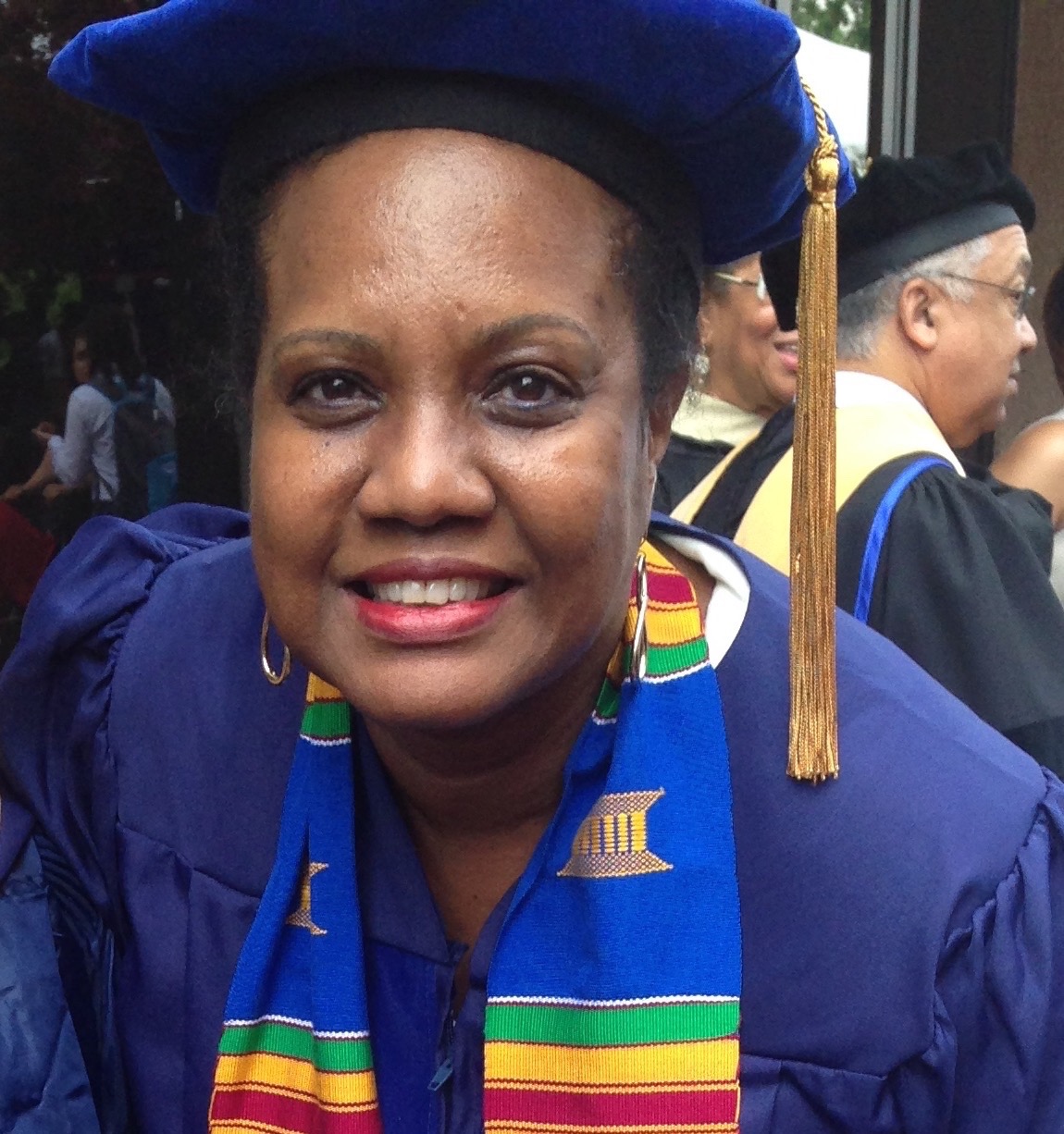
Claudia Thorne
Cheverly, MD
I was educated as a social worker and spent my career in the human services world, eventually becoming an executive director of an organization devoted to addressing issues of poverty, homelessness, and family services.
A few years back, I was sitting around with friends talking about what we had always wanted to do. I said I saw myself as a university professor, teaching and conducting research. One friend said, “Well, why don’t you do it?” My son graduated from college. I had an empty nest. So at age 55, I applied to a Ph.D. program and was accepted into Howard University’s School of Social Work.
In school, I became fascinated with gerontology. My dissertation was about professional African-American women baby boomers who are caregiving for aging parents. I was particularly interested in how this group of baby boomers provided caregiving while they managed professional roles and responsibilities. While studying, I was living that story. My parents, always my essential models for aging, had been living independently in Florida when my Dad passed this year at 93, leaving Mom a widow at age 90.
It was challenging to go back in school in my 50’s, not because of my age, but because I was also working full-time and there was a huge amount of technology to learn. But I had the desire, and when I put my head to something, I do it. My peers were supportive and didn’t see me as the grandmother in the class. I think the strength I brought was wisdom and my professional experiences of the last 35 years.
 Going through the intense rigor of graduate school has definitely prepared me to be even more competitive in the nonprofit workforce. I currently serve as Director of the Mid-Atlantic Region for ReServe, an innovative organization that matches skilled, continuing professionals 55+ with the nonprofits that need them. A special focus for me will be engaging diverse communities in opportunities for giving back.
There are many models of successful aging globally. We can learn from the experience of communities across the world as we look at models. In many groups, aging is perceived in a broad and strength-based fashion, inclusive of the roles that elders play and the contributions they bring. For example, among African-American elders, social impact and giving is often focused on families, churches, and neighborhoods. As baby boomers across ethnicities reach retirement age, we have the opportunity to engage them in many activities as long as our social impact models are culturally competent.
I completed my Ph.D. in May 2015 and graduated in full regalia with my grandchildren present. It gave me a tremendous joy and sense of accomplishment. I feel I have an opportunity as an elder, maturing woman, and an ethno-gerontologist of color to share this message.
There are always new goals and new opportunities to keep asking ourselves: “What’s the thing you always wanted to do, but never did? Who is it that you have always wanted to become? What is it that you always wanted to contribute?”