


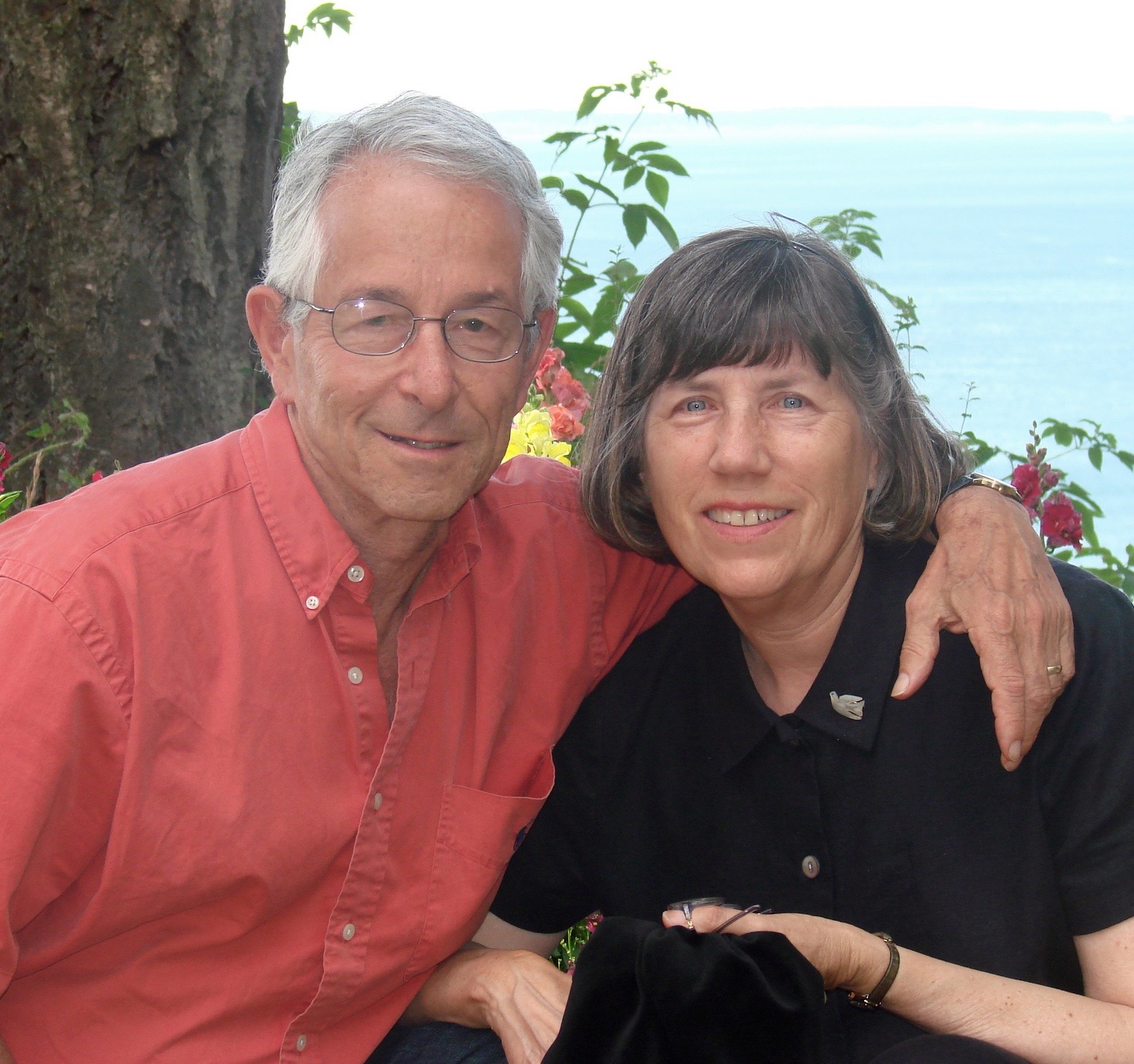
In our mid-70s, we are redefining the meaning of retirement. Many of our recent ancestors lived out their lives with shrinking worldviews and diminishing self-importance. Seeking comfort, they passively abdicated responsibility, “leaving it to the next generation.”
Our fellow elders often ask: “What are our options?” For the two of us, it is participating as fully as possible giving back with our time-tested skills, wisdom, attention and energy to cure the social and environmental sicknesses threatening our human community and Earth herself.
One of us (Len) worked as a pediatric dentist for 35 years. The other (Libby) as a licensed social worker. We are garden-variety citizens who coached soccer and Little League, camped, fished, surfed, had a big vegetable garden, went solar, quilted, paid attention to spiritual teachings, had good mentors and ate a lot of dark chocolate.
We both believe that, at the root of humankind’s crises, is people’s inability to understand our oneness, our inextricable interdependence with each other and nature. In response, we two spend our days clarifying that killing, destroying, humiliating, distancing and excluding others at home, on campus or among nations will never provide the safety and cooperation we seek.
Only acts of goodwill and communication excellence – love – can succeed. So our retirement years are occupied by facilitating diverse women, men and youth in face-to-face dialogue to listen and be listened to. Educator Gene Knudsen Hoffman describes the experience: “An enemy is one whose story we have not heard.”
Our primary approach is through the Jewish-Palestinian Living Room Dialogue, which we co-founded in our home in 1992, far before day-job “retirement.” The principles and successful practices we’ve developed and are spreading to all continents to help people in conflict engage face-to-face, experience their common humanity and reconcile. Recently, the initiative earned its place in Wikipedia, the international online encyclopedia.
Our early motivation was from spiritual and psychological insights, the photo of Earth from space, progress in our marriage, parenting, and successfully working face-to-face with more diverse citizens — especially young adults — who refused to be enemies and insisted on engaging.
We have most recently been creating dialogues in Africa and Asia, where we find an undeniable hunger of youth and adults to be listened to and dignified, and to reach out to others to heal and build relationships across old lines of separation.
In October 2015, we hosted a booth at the Parliament of the World’s Religions in Salt Lake City, Utah with Palestinian Raeda Ashkar and Nigerian Charles Obiorah Kwuelum. Nearly 10,000 people attended this event. Many booth visitors wept in gratitude for our stories of successful human reconciliation. Was the effort worth it? Did we take a few days to rest like normal elders? Absolutely yes!
Older workers bring forward great wisdom, clarity and practical skills to pass forward to other citizens, especially to youth. By choice, older citizens can also continue to be extraordinary learners and cultural creatives to seed and catalyze innovative, sustainable ways of living together as one.